
WaterLase Laser Dentistry
Lasers for use in dermatology, ophthalmology and cosmetics have been around for years and so has the WaterLase dental laser. WaterLase is cleared for numerous dental applications which can be performed on both pediatric and adult patients.
WaterLase Dentistry is one of the most advanced dental treatments available today. WaterLase uses a patented technology that combines focused light energy with a gentle spray of water for a highly precise, exceptionally gentle dental experience. WaterLase Dentistry allows your dentist to perform a wide range of procedures with benefits including:
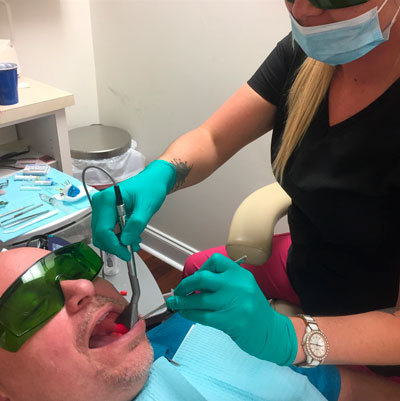
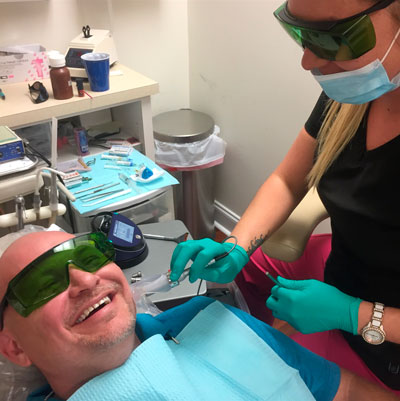
Virtually Painless, More Natural Dentistry*
Heat, vibration and pressure are the primary causes of pain associated with the use of the traditional dental drill. Since cutting both hard and soft tissues (teeth and gums) with the WaterLase does not generate heat, vibration or pressure, many dental procedures can be performed nearly pain-free with fewer shots, less need for anesthesia, less use of the drill and fewer numb lips! Additionally, using the WaterLase for gum procedures reduces bleeding, post-operative pain, swelling and the need for pain medication in many cases. It’s just a better way to get your dentistry done!
Accuracy & Precision
WaterLase dentists are able to remove tooth enamel decay (the hardest substance in the body), bone and gum tissue precisely while leaving surrounding areas unaffected. This conserves more of the precious tooth structure you were born with, helping you to maintain your natural teeth longer!
Less Bleeding & Swelling
Due to its conservative cutting action, the WaterLase performs many soft tissue (gum) procedures with little or no bleeding and less post-op swelling.
Versatility
The WaterLase is extremely versatile. It can be used for a wide range of hard and soft tissue procedures, such as decay removal, smile design, gum and bone surgical procedures, and many others.
*Discomfort is based on individual sensitivity to pain, and other factors. Not all patients can be treated painlessly without anesthetic. However, dentists using WaterLase to perform typical cavity preparations report not using anesthetic in the majority of cases.

 See All Testimonials
 Call 843-216-2517